


Industrial and manufacturing facilities face unprecedented volatility in retail electricity prices and grid reliability constraints across global markets. Commercial utility bills increasingly penalize enterprises for sudden spikes in power consumption during peak operational windows.
Facility directors must look beyond traditional power procurement to shield operating margins from escalating energy penalties. Behind-the-meter asset deployment offers a viable pathway to take direct control of enterprise electricity profiles.
Facility engineering teams can develop behind-the-meter systems around site conditions, operational requirements, and evolving electricity tariffs. At Wolong, our technical specialists consider factors such as load profiles, system reliability, tariff structures, and available installation space when supporting customer-sited storage projects.
Buyers must evaluate how electrochemical assets interact with internal loads without disrupting manufacturing workflows or safety protocols. Selecting the right architecture dictates whether an installation achieves rapid financial payback or remains an underperforming capital expense.
Enterprise leaders need clear, technical guidance rather than generic marketing promises when committing capital to complex energy projects.
Unpacking the Economics of Demand Charges
Utility rate structures often impose heavy financial penalties based on a facility's highest fifteen-minute power draw each month. These demand charges can easily account for up to half of a commercial monthly electricity statement regardless of total energy consumed.
Implementing a dedicated deployment of C&I energy storage allows enterprise operators to clip these expensive power spikes instantly. When internal machinery triggers sudden load surges, stored electrochemical energy discharges automatically to flatten the facility consumption profile.
Managing peak demand requires intelligent control algorithms that predict load spikes before they trigger utility penalty thresholds. Advanced power conversion systems monitor incoming facility loads in real time and react within milliseconds to dynamic operational changes.
Facility managers avoid complex manual load shedding while maintaining strict production output targets across every manufacturing shift. Financial modeling consistently proves that peak shaving delivers the fastest return on investment for commercial buyers.
Navigating Time-of-Use Arbitrage Opportunities
Commercial electricity tariffs frequently fluctuate between cheap off-peak rates and expensive on-peak pricing windows throughout the day. Facilities operating continuous shifts accumulate massive power costs if heavy industrial processes run unchecked during high-tariff hours.
Deploying an advanced C&I ESS transforms this cost structure through strategic energy arbitrage practices. Batteries charge overnight when regional electricity prices plummet or when onsite renewable generation peaks significantly.
Stored kilowatt-hours are subsequently discharged to power internal auxiliary loads when retail electricity rates reach their daily maximums. This operational shift decouples heavy manufacturing consumption from expensive utility pricing tiers without interrupting active production lines.
Enterprise accountants gain predictable monthly electricity expenditures that facilitate accurate long-term operational budgeting and financial forecasting. Capturing this price differential builds a reliable baseline of continuous operational savings over the entire asset lifespan.
Evaluating Thermal Management and Safety Standards
Safety remains the paramount concern for facility managers introducing high-density lithium-ion battery assets inside commercial perimeters. Thermal runaway prevention demands rigorous engineering controls and advanced cooling architectures that maintain stable operating temperatures across all active cells.
Here at Wolong, our engineering philosophy prioritizes multi-layered safety mechanisms to protect personnel and valuable industrial infrastructure. Liquid cooling methodologies ensure uniform temperature distribution, preventing hot spots and extending overall battery longevity significantly.
Commercial buyers must scrutinize regulatory certifications and enclosure fire suppression capabilities before finalizing equipment procurement contracts. Integrated systems must comply with stringent international fire safety codes governing indoor and outdoor commercial installations.
Utilizing dependable C&I energy storage assets equipped with robust automated diagnostic telemetry eliminates guesswork during daily maintenance routines. Plant operators receive immediate alerts regarding cell voltage discrepancies or thermal anomalies long before minor fluctuations escalate into operational hazards.
Integration with Existing Facility Electrical Infrastructure
Retrofitting energy assets into existing brownfield industrial plants presents unique electrical and spatial engineering challenges for project teams. Transformer capacities, switchgear ratings, and available floor space dictate where storage enclosures can be safely positioned onsite.
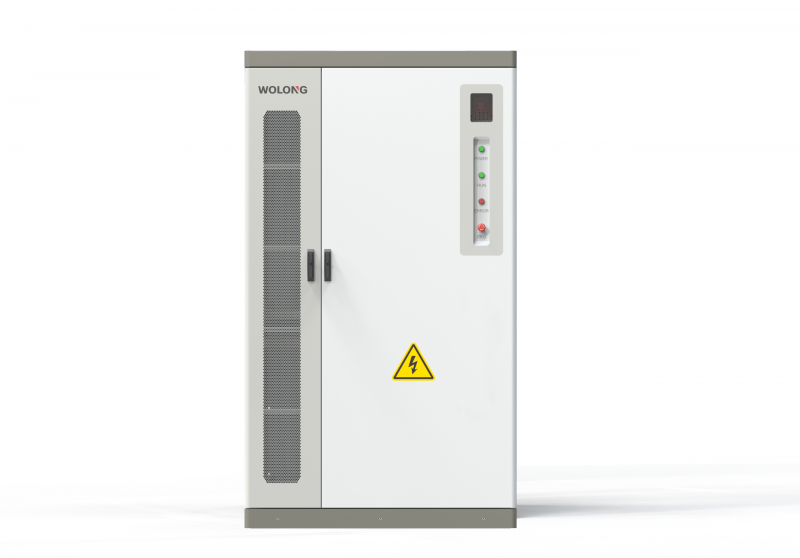
A modular C&I ESS featuring an all-in-one cabinet design streamlines complex civil and electrical installation work. Combining power conversion systems and battery modules into unified enclosures minimizes the physical footprint required within crowded plant yards.
Electrical integration requires careful synchronization with existing facility microgrids, backup generators, and rooftop photovoltaic arrays. Seamless islanding capabilities ensure critical assembly lines continue operating uninterrupted during unexpected regional grid outages or severe weather events.
Engineering teams must conduct thorough short-circuit and protection coordination studies to verify breaker settings match the new electrochemical injection profiles. Proper integration safeguards sensitive manufacturing machinery from harmful voltage transients and harmonic distortions.
Scalability and Modular Expansion Strategies
Commercial energy requirements rarely remain static as industrial facilities expand production lines or introduce vehicle electrification fleets. Initial storage installations should accommodate future load growth without demanding complete system redesigns or costly infrastructure replacements.
Deploying scalable C&I energy storage architectures allows facility managers to add battery modules incrementally as power demands increase over time. This modular flexibility protects initial capital investments from premature obsolescence.
Long-term financial success depends on selecting hardware partners capable of delivering comprehensive lifecycle support and proven technological reliability. A dependable C&I ESS bridges the gap between complex power electronics and daily commercial profitability requirements.
We at Wolong provide scalable solutions that can be configured to support different corporate sustainability and energy management objectives. Strategic behind-the-meter investments can help commercial buyers improve energy efficiency, manage costs, and integrate renewable power more effectively.