


Expanding commercial manufacturing operations inevitably drives up facility electricity demand faster than local utility grids can accommodate. Facility managers launching new power assets must anticipate future site load increases before finalizing initial footprints.
Underestimating upcoming production lines or electric vehicle fleet charging requirements leads to expensive facility retrofits later. Proactive spatial and electrical planning prevents disruptive downtime and secures long-term asset profitability.
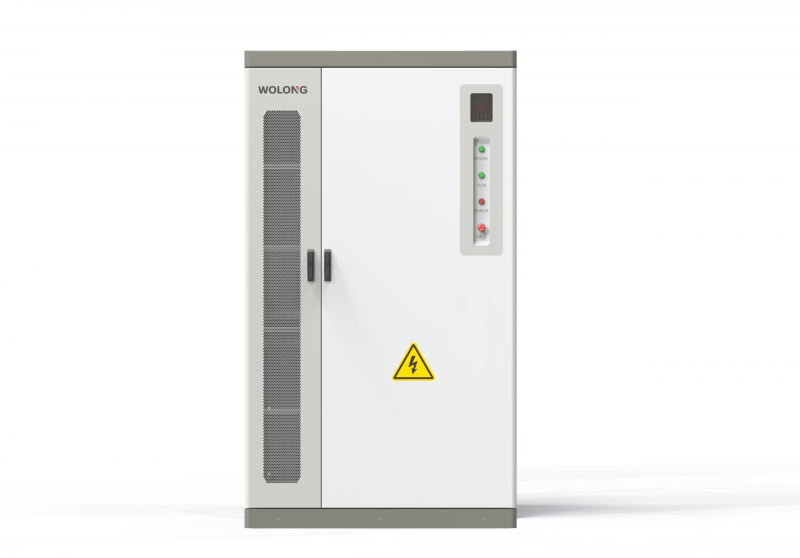
Our engineering teams at Wolong frequently consult with industrial leaders who require scalable power systems to match growing corporate campuses. Reviewing our advanced solutions showcased on our C&I energy storage product portfolio page reveals how modular layouts simplify future capacity additions.
Designing flexibility into day-one blueprints eliminates the need for complete system replacements as operational demands scale upward. Strategic foresight ensures your commercial microgrid evolves seamlessly alongside corporate growth.
Anticipating Facility Load Growth and Footprint Limits
Facility footprints often run out of available concrete pad space shortly after initial installation milestones are achieved. Designers must allocate adjacent buffer zones specifically reserved for future battery rack expansions. Neglecting physical clearance margins forces expensive civil restructuring when operations scale beyond original boundaries. Integrating a modular C&I ESS early in project lifecycles protects against spatial bottlenecks.
Spatial planning also involves evaluating indoor mechanical room ventilation and structural load-bearing limits. Heavy lithium-ion battery modules demand precise structural reinforcement that cannot easily be retrofitted into existing concrete floors. Anticipating these weight constraints early prevents costly structural remediation work during subsequent expansion phases.
Modular Electrical Architecture and Power Conversion Headroom
Initial power conversion system sizing dictates whether a facility can absorb additional storage blocks without major hardware swaps. Specifying oversized inverters or modular multi-port converters for a C&I ESS provides necessary headroom for future battery integrations. Engineers should prioritize flexible architectures that allow seamless parallel string expansion without rewriting site control logic.
Scaling industrial power infrastructure safely requires meticulous attention to grid interconnect rules and electrical protection boundaries. Wolong designs flexible commercial hardware solutions that accommodate evolving facility energy profiles effortlessly. Modular plug-and-play string designs reduce wiring complexity during secondary installation phases.
Transformer Capacity and Grid Interconnect Thresholds
Local step-up transformers represent hidden bottlenecks that frequently halt campus expansion projects unexpectedly. Utility interconnect agreements dictate strict limits on total active power export and import capabilities. Exceeding these regulatory thresholds requires formal utility renegotiation and potentially expensive transformer replacements. Upgrading auxiliary electrical gear during initial construction avoids such operational roadmaps.
Coordinating closely with local utility providers during initial design phases prevents unexpected grid interconnection roadblocks later. Engineers must calculate cumulative short-circuit ratios and harmonic distortion limits across both present and future operating states. Comprehensive electrical modeling safeguards project investments against sudden grid compliance rejections.
Software Scalability and Telemetry Integration
Energy management software must possess the computational elasticity required to monitor hundreds of additional battery cells smoothly. Outdated control platforms often crash or lag when burdened with expanded telemetry data from secondary storage racks.
Upgrading cloud-monitoring licenses and edge controllers beforehand guarantees uninterrupted visibility across growing microgrid networks. Deploying a sophisticated C&I ESS software suite ensures seamless asset expansion.
Intelligent digital platforms developed by Wolong adapt automatically as new commercial storage assets join existing local clusters. Automated node discovery protocols streamline software reconfiguration without requiring extensive manual script rewrites by on-site technicians. Seamless digital integration preserves operational continuity throughout every expansion cycle.
Fire Safety Compliance and Thermal Management Expansion
Adding high-density battery racks within existing commercial boundaries introduces stringent fire safety and code compliance challenges. Local authorities enforce strict safety standards and separation distances between adjacent container or indoor cabinet blocks. Expanding storage capacity requires verifying that existing suppression systems and smoke detection grids can scale accordingly.
Thermal management efficiency also drops when multiple high-output clusters operate in close spatial proximity. Enhanced liquid cooling loops and dedicated ventilation pathways prevent localized hot spots during peak summer heatwaves. Maintaining optimal operating temperatures preserves cell longevity and protects facility investments against unexpected thermal runaway risks.
Phased Capital Investment and Lifecycle Strategy
Budgeting models should separate initial baseline deployment costs from deferred capital expenditures allocated for future capacity scaling. Staged procurement schedules reduce immediate financial pressure while securing long-term operational expansion capabilities. Financial officers appreciate predictable cost models that scale linearly with corporate revenue growth.
Selecting a certified C&I energy storage partner guarantees that replacement sub-modules remain fully compatible across multi-year asset lifecycles. Rapidly evolving cell chemistries can introduce compatibility hurdles if initial hardware suppliers fail to maintain backward compatibility. Procuring future-proof technology protects institutional investments against premature obsolescence and costly redesigns.
Maximizing long-term profitability across industrial campuses requires continuous evaluation of local tariff structures and peak shaving demands. Expanding storage capacity strategically allows facilities to capture rising demand charges effectively as commercial operations scale upward. Integrating reliable C&I energy storage completes the roadmap toward enduring energy resilience.
Future-Proofing as a Long-Term Investment Principle
Comprehensive infrastructure scaling relies on robust hardware compatibility and proactive engineering foresight. Future-proofing commercial assets guarantees seamless adaptation to evolving industrial energy landscapes. Organizations embracing modular growth frameworks secure enduring market competitiveness.