


Recent market headlines point to a fundamental shift in utility grid management worldwide. Power authorities and regional grid operators are updating procurement rules to enforce grid stability amidst rising renewable energy penetration.
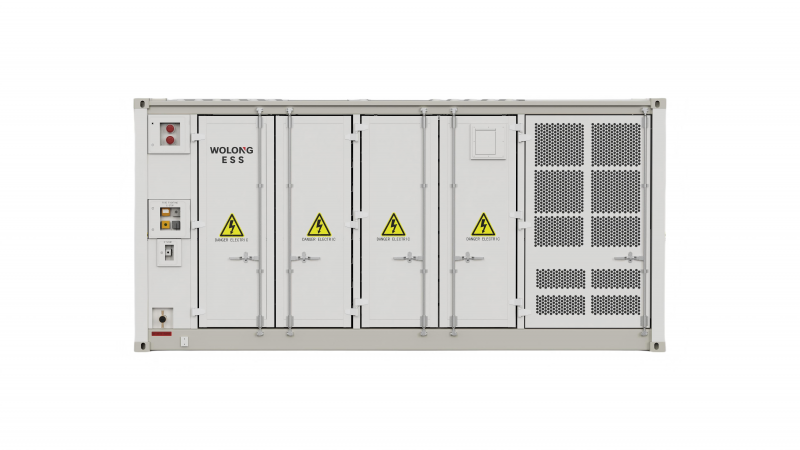
Wolong stays abreast of these ever-evolving regulatory requirements so that it may build responsive and grid-ready equipment. Rapid frequency regulation and energy time-shifting are two features offered by our containerised battery solutions that can help utilities meet strict regulatory standards.
As some regions reduce dependence on conventional power sources, flexible energy storage solutions are becoming increasingly important for maintaining grid reliability. In the event of unexpected dips in generation across transmission grids, utility operators must have high-efficiency gear that can stabilise voltage.
By implementing green energy storage, utilities may mitigate localized grid congestion and smooth out supply swings. Clean power generation and uninterrupted grid reliability are connected through advanced battery assets.
This news highlight takes a look at how changes in the market, new regulations, and technological advancements in hardware are influencing the deployment of utility batteries in power grids around the world.
Market News and Policy Trends Accelerating Large-Scale Energy Storage
Grid interconnection reforms are making headlines across major energy markets. Many energy markets are improving grid planning processes to support faster renewable energy integration and storage deployment.
At the same time, regional capacity markets are restructuring compensation models for grid support services. Market operators now offer higher financial incentives for fast-responding battery storage systems that deliver instant frequency response within milliseconds.
Government mandate updates are setting ambitious clean energy storage targets for 2030 and beyond. These policy directives require power utilities to procure dedicated battery storage capacity to back up intermittent wind and solar assets.
Utility procurement trends show a clear move toward long-duration storage capacity. System planning commissions now prioritize four-hour and eight-hour battery systems to ensure multi-hour grid resilience during extreme weather events and peak load demand.
Investment trends reflect growing institutional confidence in grid-scale battery projects. Lower equipment manufacturing costs and standardized insurance framework agreements are accelerating utility investments in large-scale energy storage assets worldwide.
Standardized compliance directives, including updated IEC safety standards, are changing equipment specification rules. Project developers must select fully certified enclosures equipped with advanced fire suppression and active liquid cooling systems.
Modular Engineering for Green Energy Storage Infrastructure
Hardware manufacturers are updating enclosure architectures to satisfy these strict grid safety and performance standards. Modular containerized enclosures combine battery racks, power conversion systems, and liquid cooling inside single transportable units.
Liquid thermal management has emerged as a crucial requirement for utility-scale battery projects. Circulating liquid coolant directly through battery modules maintains uniform cell temperatures and prevents thermal runaway risks during heavy charge and discharge cycles.
At Wolong, our manufacturing facilities consolidate cell packaging, power electronics assembly, and transformer integration under a unified quality ecosystem. This integrated approach ensures consistent system quality, lowers overall project risk, and simplifies field installation.
Standardized balance-of-plant components are specifically engineered to match utility operating profiles. Integrated dry-type double-winding transformers provide non-excitation voltage regulation while minimizing electrical losses in step-up power cabins.
Advanced battery management software continuously monitors cell voltage, current, and temperature metrics. Predictive telemetry analytics enable active cell balancing, ensuring extended operational cycle life and predictable storage capacity over multi-year lifecycles.
Modern containerized units can also interface directly with clean fuel equipment. Pairing high-efficiency power electronics with AEM water electrolysis devices allows power plant operators to direct excess clean energy toward green hydrogen production.
Field Deployments and Industry Applications
Utility developers prefer fully integrated storage designs because they streamline field commissioning. Coordinated control software ensures seamless communication between battery strings, inverter units, and central energy management systems without vendor compatibility issues.
A single containerized battery installation can perform multiple grid services simultaneously within the same operational cycle. Operators utilize these versatile systems for peak shaving, power factor correction, spinning reserve support, and voltage smoothing on regional distribution lines.
Commercial and industrial facilities also benefit from localized containerized storage platforms. Discharging stored power during peak tariff hours helps industrial enterprises eliminate high demand charges while securing reliable emergency standby power.
Real-world project deployments prove the operational effectiveness of containerized battery systems in challenging environments. Integrating large-scale energy storage into regional networks provides vital capacity firming across heavy industrial corridors.
Notable operational projects include a 276-megawatt direct current energy storage system operating in Inner Mongolia. Another flagship installation in Baotou provides 100 megawatts of rapid response capacity to cushion industrial power grids against sudden load surges.
International trade exhibitions, including TSEE Munich and SNEC Shanghai, highlight growing global demand for certified BESS equipment. Strategic partnerships across the supply chain accelerate the deployment of standardized modular storage blocks across expanding regional markets.
Engineering Future-Ready Grid Assets for Long-Term Value
Building truly future-ready grid infrastructure requires accounting for 15-to-20-year operational horizons, changing market regulations, and battery degradation curves. Rather than relying on generic summary claims, modern utility BESS projects demand concrete engineering strategies to maintain asset value over multi-decade lifecycles.
A core requirement for long-term performance is modular cell augmentation planning. As battery cells naturally age over thousands of charge cycles, containerized enclosure layouts must accommodate staged module additions without requiring rewiring of existing power conversion units or step-up transformers.
Grid-forming inverter integration represents another essential technical capability for next-generation utility assets. Transitioning from basic grid-following controls to grid-forming architectures allows storage enclosures to provide synthetic inertia and black-start capability during regional power outages.
Implementing green energy storage hardware with active cell augmentation and digital twin telemetry allows facility managers to predict thermal trends and optimize dispatch algorithms. Remote firmware updates ensure that fielded hardware remains fully compliant with changing regional grid codes and capacity market structures.
Selecting pre-engineered, factory-tested equipment protects capital investments from premature technical obsolescence and expensive field modifications. Standardized component manufacturing and centralized quality testing simplify routine maintenance, lowering total cost of ownership across the complete asset lifespan.
Teams up with Wolong to put into action engineered energy storage technologies that are both efficient and stable for the grid in the long run. Get in touch with our application engineering team right away if you want to examine comprehensive technical requirements and assess modular storage setups for a future utility project.