


Transmission operators across major global power markets face unprecedented bottlenecks for new grid connections. Interconnection applications sit in administrative pipelines for years, severely delaying clean energy integration.
Infrastructure expansion timelines cannot keep pace with surging electrification trends and rapid load growth. Planners require alternative strategies to bypass persistent bottlenecks without compromising system reliability.
The Anatomy of Modern Transmission Backlogs
Clean energy adoption has flooded transmission organizations with thousands of speculative generation requests. Regional providers lack engineering staff and bandwidth to review complex impact studies at matching velocities.
Consequently, connection queues stretch past five years in major power markets. Administrative burdens severely penalize developers who secured capital but cannot obtain formal authorization to energize.
Beyond administrative obstacles, physical transmission corridors frequently lack thermal headroom to absorb additional power flows. Upgrading transformers and stringing conductors requires lengthy permitting processes, environmental reviews, and immense capital investments.
Physical constraints turn standard interconnection studies into multi-year hurdles that discourage private infrastructure investment. Operators find themselves trapped between rising decarbonization mandates and rigid legacy network architectures.
Unlocking Network Capacity Through Flexible Interconnection Agreements
Regulatory bodies are beginning to transition away from rigid queue models toward dynamic evaluation frameworks. Flexible interconnection agreements allow projects to connect under non-firm conditions, curtailing output during localized congestion events instead of waiting for upgrades.
This regulatory evolution opens the door for innovative deployment models that bypass traditional construction roadblocks entirely. Developers can now utilize utility-scale energy storage to capture curtailed energy locally during high-congestion periods.
Non-firm connection terms shift the operational paradigm from absolute capacity guarantees to intelligent congestion management and load shifting. By storing excess generation locally, facilities avoid losing clean electricity when upstream lines reach thermal limits.
At Wolong, we design intelligent control systems that interface smoothly with these evolving regulatory frameworks. Such an approach allows developers to monetize volatile grid conditions while maintaining strict compliance with local utility interconnection rules.
Deploying Agile Assets to Mitigate Regional Congestion
Physical battery assets inject immediate operational flexibility into congested substations by absorbing surplus power during peak generation hours. Instead of spilling renewable generation, operators route surplus electricity into high-capacity electrochemical modules for later discharge.
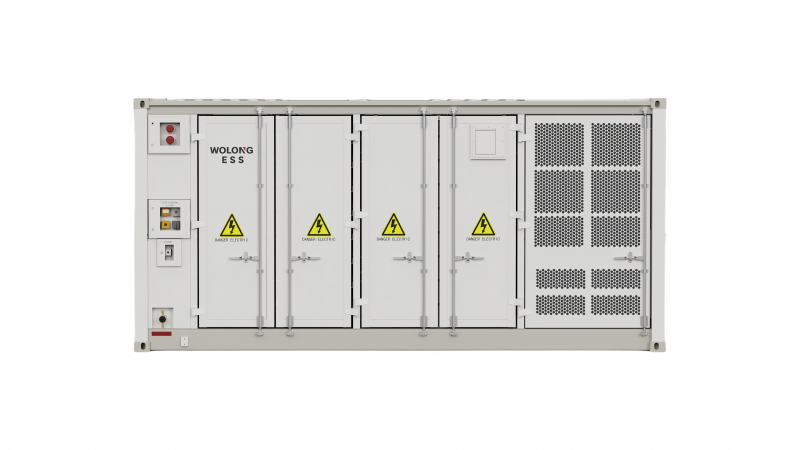
Localized buffering alleviates immediate thermal stress on transformers and distribution lines without waiting for federal line permits. Deploying utility-scale energy storage systems directly transforms a network bottleneck into an active balancing node.
Advanced power conversion electronics enable these assets to react within milliseconds to sudden frequency deviations and voltage fluctuations. Such rapid responsiveness fulfills critical ancillary service requirements, helping system operators maintain steady grid frequency across volatile operating zones.
Furthermore, multi-megawatt battery installations provide synthetic inertia, replacing the stabilizing effect of retiring fossil fuel generators. Technical attributes make physical storage an indispensable tool for modern grid management strategies.
Site selection plays a vital role in maximizing congestion-relief benefits of localized electrochemical generation buffers. Placing storage units near high-density renewable clusters or constrained industrial loads minimizes line loss and maximizes economic return.
At Wolong, our engineering teams conduct rigorous site-specific modeling to optimize asset placement and configuration. Careful analysis ensures that every megawatt-hour deployed delivers maximum utility value under stringent operational constraints.
Engineering Path Forward for Constrained System Operators
Overcoming multi-year interconnection bottlenecks requires collaborative planning between transmission owners, equipment manufacturers, and commercial project developers. Standardized equipment modules accelerate procurement cycles and reduce on-site installation friction during tight construction windows.
Furthermore, adopting advanced safety protocols ensures that high-density electrochemical installations meet strict international fire and electrical standards. Reliability remains paramount as storage assets take on heavier responsibilities within mainstream transmission networks.
Operating as an industry pioneer, utility-scale energy storage innovations continue to evolve to meet demanding requirements of modern power systems. We focus heavily on thermal management, high round-trip efficiency, and modular scalability to ensure long-term operational resilience.
Our manufacturing facilities produce robust utility-scale energy storage systems engineered for intense daily cycling and harsh environmental conditions. Every integrated system undergoes rigorous testing before deployment to guarantee flawless performance in the field.
Financing structures are also adapting to reflect unique risk profiles and revenue stacking capabilities of modern battery assets. Investors look favorably on projects equipped with intelligent energy management systems capable of participating in multiple electricity markets simultaneously.
Revenue diversification shortens payback periods and provides a robust financial hedge against fluctuating energy spot prices. Strategic deployment of utility-scale energy storage systems directly enhances project bancability across competitive regional markets.
Looking ahead, bridging the infrastructure gap demands continued cooperation between regulatory bodies, utilities, and technology providers worldwide. Embracing flexible connection frameworks allows the energy sector to bypass administrative deadlocks and accelerate carbon reduction targets.
At Wolong, we remain committed to delivering advanced utility-scale energy storage solutions that empower a resilient and flexible energy future. Our proven hardware portfolio positions developers to overcome grid hurdles and achieve lasting operational success.