


Modern power grids face severe congestion as renewable generation capacity rapidly outpaces regional transmission expansion across multiple interconnected territories. Siting generation assets far from major load centers creates chronic bottlenecks that severely limit operational flexibility and profitability.
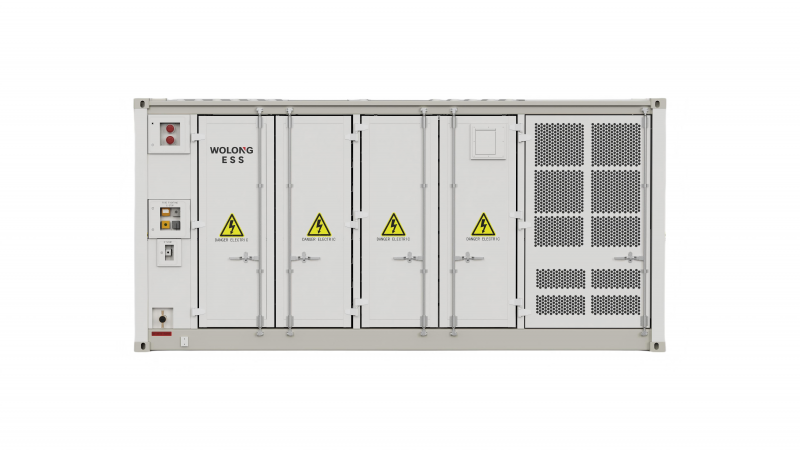
As grid experts at Wolong, we see firsthand how network planners must rethink conventional siting strategies to accommodate the massive influx of intermittent clean energy sources.
Placing energy assets directly adjacent to electrical nodes transforms how network operators manage complex power flows during peak demand periods. Proximity to transformation hubs changes the entire economic and operational equation for modern developers seeking reliable grid access.
Strategic collocation unlocks immediate capacity headroom without requiring expensive, multi-year greenfield transmission construction projects that trigger environmental scrutiny.
Spatial Bottlenecks and Grid Edge Real Estate
Developers confront strict land availability constraints near high-voltage transmission corridors across every major regional market. Securing right-of-way approvals for lengthy generator lead lines delays deployment timelines significantly and inflates initial capital expenditures. Locating physical assets right at the substation fence line bypasses these complex physical hurdles entirely, accelerating project schedules.
Urban and semi-urban substations offer extremely limited real estate for clean energy infrastructure deployment today. Compact engineering designs become mandatory to fit high-density power hardware into tightly restricted footprints safely.
Our engineering teams build modular containerized layouts optimized precisely for constrained substation yards. Space efficiency dictates operational success in modern urban grid environments where land valuation reaches extreme peaks.
Impedance Reduction and Line Loss Mitigation
Electrical resistance scales directly with the physical distance separating generation sources and regional consumption points. Long transmission paths dissipate valuable megawatt-hours through persistent thermal losses and high resistive impedance.
Positioning storage units directly beside transformation yards drastically shortens the conductive path. Power delivery efficiency improves markedly, preserving every single stored kilowatt for peak deployment.
Voltage stability degrades rapidly when large blocks of power travel across sprawling distribution networks. Substation-adjacent assets stabilize local voltage profiles by injecting or absorbing reactive power instantly.
Grid operators rely on localized injection to prevent voltage sags during sudden industrial load spikes. Voltage regulation becomes a localized chemistry of rapid response rather than a macro transmission challenge.
Energy losses and high-voltage cabling costs escalate exponentially when projects sit miles away from grid tie-ins. Shorter cable runs reduce capacitive charging currents and mitigate complex harmonic distortion issues.
System planners achieve superior round-trip efficiency when electrical impedance drops to minimal levels. Here, deploying utility-scale energy storage helps capture peak output without resistive waste.
Interconnection Queue Optimization and Headroom
Interconnection queue delays remain the single biggest roadblock stalling clean energy deployment worldwide today. Securing grid access becomes exceptionally difficult when projects require brand-new transmission lines across private lands. Substation-proximate siting utilizes existing transformer capacity, bypassing years of complex environmental studies and regulatory reviews. Interconnection studies streamline significantly when physical expansion is minimized or entirely avoided.
Network hosting capacity dictates how many megawatts can connect safely without overloading legacy transformers. Evaluating substation capacity requires deep technical analysis of existing feeder loads and reverse power flows.
Modern assets require careful coordination with regional transmission organizations to secure optimal injection slots. Strategic placement unlocks latent headroom that traditional remote generation cannot access.
Capital expenditure budgets shift favorably when civil works remain restricted to brownfield substation plots. Excavation, trenching, and grading expenses shrink dramatically compared to remote greenfield site development.
Project finance teams look favorably on assets that share security perimeters and protection schemes with established facilities. Furthermore, integrating utility-scale battery energy storage systems directly inside these yards minimizes civil engineering risks.
Dynamic Response and Frequency Regulation Mechanics
Frequency regulation demands sub-second response capabilities that only advanced electrochemical assets deliver reliably. Locating these assets at primary distribution hubs minimizes communication latency and control loop delays.
Grid stability commands absolute precision, making every millisecond of transmission delay critical to system security. Centralized control rooms execute dispatch commands instantly when physical distance is practically eliminated from the operational equation.
Dynamic reactive power support safeguards regional grids against sudden fault-induced generation losses. Substation-connected utility-scale battery energy storage systems act as immediate shock absorbers during major contingency events.
Rotating mass inertia deficits are successfully counterbalanced by lightning-fast power electronics injection. System operators depend heavily on this rapid response to prevent cascading blackouts across interconnected transmission networks.
Civil CapEx Reduction and Brownfield Integration
Integrating advanced energy units into existing substation yards maximizes utility asset utilization. Regional utilities welcome configurations that reinforce existing substations without requiring massive acreage acquisitions.
Stakeholder opposition plummets when industrial upgrades remain contained within established utility boundaries. Asset owners enjoy streamlined community relations and faster permitting approvals across municipal jurisdictions.
Our Wolong engineered power conversion systems ensure optimal synchronization with local grid frequencies and phase angles. Advanced islanding capabilities protect critical infrastructure by maintaining localized microgrid operations during major weather disruptions. Resiliency transforms from a theoretical planning metric into a dependable daily operational reality for local industrial consumers.
Scalability for Future Grid Expansion
Future-proofing energy infrastructure requires foresight regarding regional load growth and emerging electrification demands. Substation-integrated utility-scale battery energy storage systems offer modular scalability to accommodate future capacity expansions easily.
Modular container designs allow operators to scale up power and energy ratings seamlessly without requiring additional real estate acquisitions or complex permitting amendments.
Commercial success in clean energy markets hinges on avoiding curtailment and maximizing asset utilization rates. High-performance utility-scale energy storage situated at strategic grid nodes captures peak generation without wasting clean electrons.
Maximizing the Strategic Value of Substation-Connected Storage
With experience in the energy sector, we at Wolong provide integrated solutions designed to address the challenges of power electronics integration and grid code compliance.
Strategic site selection ultimately determines whether a storage project delivers maximum financial return or chronic operational headaches. Furthermore, deploying reliable utility-scale energy storage across these nodes completes the infrastructure puzzle.