


Commercial facility directors face a difficult budgeting dilemma when sizing clean energy assets for erratic industrial load profiles. Purchasing full nameplate capacity upfront drains capital reserves long before factory automation lines actually demand peak power support.
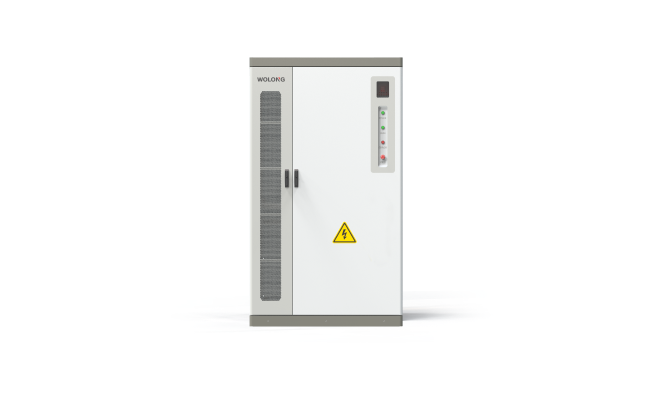
Implementing modular phased strategies allows plant engineers to align capital expenditure precisely with actual operational growth over time. Here at Wolong, our technical teams help facility planners avoid costly over-sizing traps by designing flexible architectures.
Monolithic installations lock organizations into rigid physical footprints that cannot adapt easily to sudden operational shifts or unexpected load drops. Deploying modern C&I battery storage through incremental phases protects corporate cash flow while matching real-time facility expansion milestones.
Stakeholders eliminate the risk of stranded assets by scaling megawatt blocks only when production lines genuinely require additional power reserves. Careful staging transforms high-risk capital outlays into manageable operating expenditures across multiple fiscal years.
The Capital Risk of Over-Sizing Monolithic Systems
Purchasing massive multi-megawatt systems in a single procurement cycle exposes balance sheets to severe capital inefficiency and financial strain. Load forecasts frequently overestimate future facility expansion rates, leaving excess energy capacity sitting idle and degrading on site. Phased deployment models distribute capital expenditure across multiple budget years, matching cash outflows directly with actual revenue generation milestones.
Procurement teams evaluating commercial energy assets must consider how rapidly factory energy profiles evolve under new automation schedules. Monolithic designs require oversized transformers and massive switchgear from day one, inflating initial construction budgets unnecessarily.
Transitioning to step-by-step capacity additions eliminates these heavy upfront burdens while preserving maximum operational flexibility across the enterprise. Financial controllers welcome predictable spending patterns over aggressive lump-sum investments that strain corporate liquidity.
Scaling Infrastructure Step-by-Step
Modular containerized blocks enable engineers to integrate new storage capacity without disrupting active manufacturing floors or core power distribution routes. Adding subsequent blocks requires minimal civil engineering work, drastically reducing downtime risks during ongoing plant operations. Systematic expansion workflows transform complex grid integration tasks into predictable, repeatable installation steps for facility technicians.
Facility managers gain complete control over project timelines by treating energy storage as an expandable utility rather than a fixed asset. Growing power needs are met smoothly by stacking standardized modular units together as factory automation footprints expand across the site. Designing scalable electrical layouts ensures that future additions plug seamlessly into existing supervisory control networks without communication bottlenecks.
Managing Thermal Integrity During Expansion
Thermal management complexity multiplies quickly when mismatched battery blocks operate side-by-side within a crowded industrial yard environment. Older cells degrade at different rates than newly added units, creating localized temperature imbalances that threaten overall system longevity. Integrating a sophisticated liquid cooling BESS architecture neutralizes these thermal discrepancies by maintaining uniform cell temperatures across all installed racks.
Precise temperature regulation prevents thermal throttling during intense charge and discharge cycles, even as facility loads scale upward incrementally. At Wolong, our thermal engineers integrate specialized manifold designs that balance coolant flow dynamically across every modular expansion block. Maintaining strict thermal consistency protects chemistry health and ensures predictable performance across multi-year operational lifecycles without unexpected outages.
Expansion projects often fail when legacy cooling loops cannot support the added thermal load of new battery enclosures. Retrofitting traditional air-cooled systems during later phases proves prohibitively expensive and disruptive to daily facility workflows.
Selecting a scalable liquid cooling BESS from inception avoids these structural headaches entirely during subsequent capacity additions. Fluid-based thermal control scales naturally alongside growing battery blocks without requiring complete system redesigns.
Aligning Storage Growth with Facility Demands
Continuous data monitoring reveals exact energy consumption patterns, allowing facility operators to time subsequent storage expansions with pinpoint accuracy. Analyzing historical peak demand trends identifies the precise month when additional capacity becomes economically viable. Smart software platforms track state-of-health metrics across every deployed module to optimize augmentation schedules and maintenance windows.
Strategic facility planning demands rigorous alignment between production targets and electrical infrastructure readiness. Scaling C&I battery storage incrementally ensures that capital investments match real-world facility demands rather than speculative long-term forecasts. Operational teams maintain total visibility over system performance as new capacity blocks join the active network architecture.
Balancing electrical capacity with fluctuating industrial loads requires a disciplined, step-by-step procurement methodology that prioritizes long-term asset agility. Modular growth eliminates the financial hazards of monolithic over-building while safeguarding operational continuity across demanding manufacturing schedules. Integrating scalable C&I battery storage empowers facility leaders to manage energy costs proactively without straining capital budgets.
Reliable execution depends on selecting robust hardware platforms capable of expanding smoothly alongside growing industrial demands and grid mandates. Collaborating with Wolong ensures that every phased capacity addition integrates seamlessly into your facility's long-term energy strategy.
Implementing a reliable liquid cooling BESS completes the flexible growth blueprint for modern industrial enterprises everywhere. Future-proof energy management begins by embracing modular scalability today.