


Selecting industrial power configurations requires evaluating physical architecture before signing procurement contracts. Facility managers debate whether compact indoor enclosures or large modular setups suit site constraints.
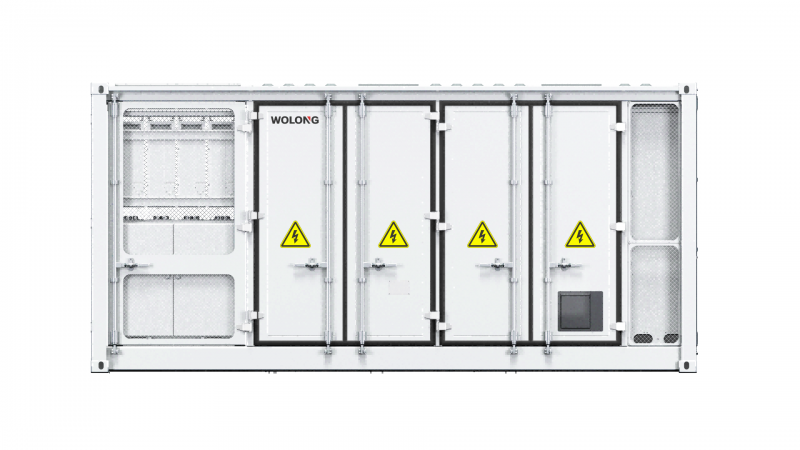
Operational success depends entirely on matching spatial limitations with electrical requirements. Choosing the right hardware format prevents expensive operational bottlenecks and optimizes overall investment returns.
Cabinet vs Container: The Core Form-Factor Decision
Evaluating these two form factors demands a precise breakdown of site geography, power density, and safety margins. Commercial facilities often lack the acreage required for massive multi-megawatt yards, making local footprint optimization a priority for renewable energy storage integration.
Industrial buyers must weigh these spatial restrictions against overall megawatt-hour targets. Strategic facility planning also involves analyzing local zoning laws, fire safety codes, and structural load capacities.
When evaluating these site requirements, we at Wolong assist clients in navigating complex spatial limitations safely. Indoor installations face strict building ventilation rules, whereas outdoor yards require extensive perimeter security fencing and clearance zones.
Understanding these environmental prerequisites ensures seamless project permitting from day one without unexpected delays. Facility layout strategies must also account for future maintenance accessibility, cabling paths, and local grid interconnection rules.
Ignoring these parameters during initial site evaluation often leads to costly engineering redesigns and unexpected commissioning delays later. Proper pre-planning ensures that chosen hardware integrates harmoniously into existing factory floors or open utility substations.
Spatial Footprint and Physical Layout Dynamics
Chassis units typically serve localized commercial spaces where available floor space remains severely restricted. Our engineering teams at Wolong design these compact systems to integrate directly into tight indoor rooms or restricted factory corners.
Small footprint enclosures ensure that businesses do not sacrifice valuable operational floor space for essential backup power infrastructure. Container installations, conversely, occupy outdoor concrete pads designed for utility-scale capacity.
Massive multi-megawatt yards require distinct multi-container layouts to handle heavy electrical loads safely. Modern energy storage products utilize standardized ISO container dimensions to simplify site engineering, civil planning, and plot mapping across large open terrain areas.
Physical layout planning also dictates cabling distances between power conversion systems and battery racks. Indoor cabinets minimize DC run lengths by housing converters and cells within a single unified housing structure for renewable energy storage.
Outdoor container farms distribute power across longer spans, requiring underground trenching, heavy-duty conduits, and rigorous grounding protocols. Thermal Regulation and Capacity Scalability Realities
Temperature control represents a major performance differentiator between both equipment types. Indoor cabinet architectures rely on advanced liquid cooling plates attached directly to battery modules to maintain uniform thermal thresholds.
Such precision cooling minimizes internal temperature gradients across dense cell arrangements during heavy cycling. Large outdoor enclosures manage extreme ambient weather through integrated HVAC and liquid circulation loops.
Maintaining precise thermal balance prevents cell degradation across extended operational lifecycles, especially when supporting fluctuating microgrid networks. Robust weatherproofing protects sensitive electronics from heavy rain, dust, and corrosive maritime air.
Scaling capacity upward involves entirely different engineering pathways for each architectural format. Cabinets expand horizontally by adding modular sub-racks inside a shared room, whereas containers scale by linking additional multi-megawatt units in parallel via high-voltage buses.
Selecting proper energy storage products hinges on anticipating long-term site load growth and future campus expansions. Environmental resilience testing validates how enclosures handle extreme temperatures, humidity spikes, and seismic loads.
Indoor cabinet units operate within climate-controlled building envelopes that shield them from severe weather shocks. Containerized systems undergo rigorous wind-load calculations and thermal chamber testing to guarantee reliable field performance in harsh desert or arctic climates.
Integration Complexity and Deployment Logistics
Factory pre-assembly reduces on-site wiring mistakes and accelerates overall project timelines significantly. Compact indoor enclosures arrive fully configured, allowing certified technicians to commission the system within days of initial delivery.
Turnkey delivery minimizes prolonged disruption to ongoing daily manufacturing activities inside active commercial facilities. Outdoor containerized systems require specialized transport permits, heavy crane positioning, and robust civil foundation work.
Heavy logistics coordination adds distinct cost variables that facility planners must factor into initial capital expenditure calculations. Site preparation requires careful permitting, geotechnical surveys, and heavy utility grid interconnect coordination before physical placement.
Interconnection testing bridges the gap between physical hardware installation and digital energy management software. Commissioning engineers verify communication protocols, telemetry feeds, and emergency shutdown triggers before activating live grid feeds.
Thorough pre-commissioning checks safeguard capital investments against unexpected hardware faults or grid synchronization failures. Decision Matrix for Industrial Project Success
Matching Form Factor to Project Scale
Matching hardware specifications to specific operational goals eliminates costly redesign iterations later. Industrial microgrids demanding rapid rooftop or basement integration benefit greatly from compact cabinet setups and versatile energy storage products.
Facility engineers gain reliable peak-shaving capabilities without undertaking massive civil construction projects. Utility-scale generation sites demand massive megawatt-hour capacities that only standardized container yards can deliver efficiently.
Grid operators require high-density storage blocks capable of fast frequency response and seamless renewable energy storage dispatch. Our solutions at Wolong provide scalable blueprints tailored to these exact utility requirements, ensuring maximum asset longevity and grid reliability.
Long-term asset performance ultimately depends on matching the right architectural form factor to your specific operational landscape. Reviewing total cost of ownership, maintenance accessibility, and footprint constraints empowers B2B buyers to make confident procurement choices. Strategic deployment sets the strong foundation needed for a resilient, highly efficient, and fully decarbonized industrial future.