


Battery procurement managers frequently evaluate upfront capital costs without considering daily cycling limits. Specifying incorrect operational limits triggers rapid cell degradation, slashing expected project revenues prematurely.
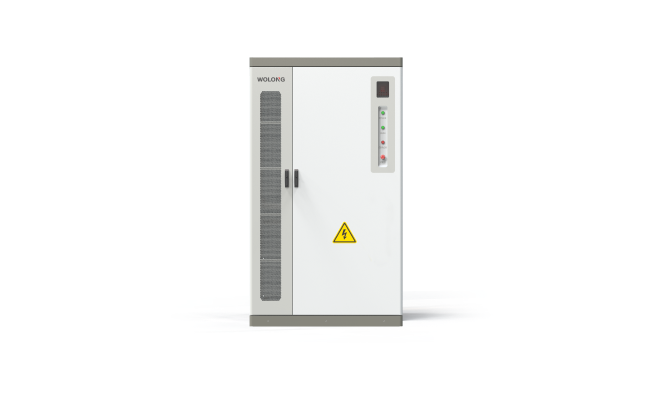
Understanding Depth of Discharge remains paramount for optimizing asset lifecycles. At Wolong, we work closely with developers to master real-world electrochemical stress parameters before agreements are finalized. Professional buyers must look beyond nominal capacity ratings to ensure sustainable project performance.
Depth of discharge measures the percentage of battery capacity extracted relative to total nominal energy storage capacity. Drawing a unit down to zero percent represents complete extraction, though chemical thresholds rarely allow this safely. Lithium-ion architectures suffer accelerated internal resistance spikes when pushed to absolute physical boundaries repeatedly. Operational guidelines establish strict boundaries to protect assets from permanent mechanical fatigue.
Our engineering teams analyze these chemical wear patterns rigorously during early system architecture design. Engineers map precise voltage drop curves to determine safe operational limits for varying cell chemistries.
Maintaining moderate extraction thresholds dramatically reduces microscopic lithium plating and solid electrolyte interphase thickening. Optimizing these parameters preserves electrochemical stability over thousands of sequential cycles.
Cell electrochemistry dictates that deeper cycles induce greater mechanical stress on active material crystal lattices. Restricting daily extraction ranges distributes ionic movement evenly across graphite anodes and lithium metal oxide cathodes.
Facilities avoiding aggressive voltage extremes experience slower capacity fade trajectories throughout commercial operating horizons. Technical specifications provided by cell manufacturers outline safe operating regions that must govern site dispatch algorithms.
Defining Depth of Discharge and Its Direct Electrochemical Impact
Cycle life ratings vary inversely with daily extraction depth, creating critical economic trade-offs. Operating a system at ninety percent DoD yields fewer total lifetime throughput kilowatt-hours than operating at sixty percent.
Project developers must calculate levelized cost of storage by factoring degradation velocity against revenue opportunities. Maximizing short-term dispatch capacity often shortens the overall operational window.
Large-scale renewable energy storage setups require balancing intermittent generation peaks against local load profiles. Solar and wind inputs fluctuate unpredictably, forcing storage assets to absorb sudden spikes.
Controlling extraction limits dynamically prevents thermal stress during high-demand dispatch windows. Smart power management software ensures daily usage aligns with manufacturer degradation warranties.
Economic modeling must incorporate replacement cost contingencies when aggressive dispatch profiles are selected for revenue stacking. Financial stakeholders benefit from understanding how minor adjustments to operational thresholds extend asset life by multiple years. Balancing daily grid service revenues against long-term degradation expenses ensures sustainable capital returns for institutional investors. Rigorous mathematical modeling protects utility-scale portfolios from premature asset write-downs.
How Operational DoD Curves Dictate Asset Lifecycle Economics
Oversizing physical battery capacity provides a reliable buffer preventing excessive daily depth stretching. Facility planners add safety margins to ensure required daily usable energy without pushing cells past critical stress points.
Strategic overbuilding shifts operational stress downward, extending calendar and cycle life significantly. Upfront capital expenditure increases slightly, yet long-term replacement liabilities decrease substantially over the asset lifecycle.
Deploying robust industrial energy storage installations demands precise alignment between load forecasting models and physical hardware limits. Manufacturing plants experience heavy transient loads demanding rapid power bursts.
As Wolong, we configure advanced thermal and electrical control layers to absorb these aggressive transients safely. Protecting internal cells preserves high-efficiency operation through volatile production shifts.
Engineering teams evaluate peak demand signatures to determine optimal inverter-to-battery capacity ratios for specific industrial use cases. Integrating intelligent sizing software prevents unexpected capacity bottlenecks during facility expansion or sudden load surges.
Project buyers must review site load profiles thoroughly before freezing physical system footprints and transformer ratings. Comprehensive planning eliminates costly post-commissioning modifications and ensures seamless grid integration.
Sizing Strategies for Intermittent Generation Integration
Warranty agreements typically hinge on strict adherence to defined annual throughput limits and maximum operational extraction depths. Exceeding specified operational envelopes voids manufacturer liability instantly, leaving asset owners exposed to expensive premature repairs and legal disputes.
Legal review of warranty terms must verify how cumulative throughput metrics interact with daily operational profiles. Contractual clarity protects project financing structures against unexpected hardware failure exclusions.
Optimizing modern renewable energy storage assets requires continuous monitoring of State of Charge and actual degradation metrics. Operational teams utilize real-time telemetry platforms to track individual rack temperatures and voltage variances. Predictive analytics flag micro-anomalies long before they manifest as critical capacity drop-offs. Proactive maintenance routines secure maximum asset value.
Procuring reliable industrial energy storage hardware demands a holistic view of capacity degradation and operational limits. Project stakeholders must weigh short-term revenue generation against physical electrochemical wear.
Our teams partner closely with clients to design durable systems tailored to specific application profiles. Thorough planning guarantees enduring financial success across decades of continuous service.
Balancing Usable Capacity with Long-Term Warranty Protection
Final capital allocation decisions depend heavily on thorough comprehension of non-battery infrastructure costs when procuring advanced energy systems. Project stakeholders must look beyond initial cell pricing to evaluate total system integration expenses.
Rigorous vendor evaluation safeguards commercial portfolios from unbudgeted capital outflows and operational delays. Wolong provides comprehensive lifecycle guidance to ensure long-term operational success for every deployed asset.
Advanced renewable energy storage integration relies on precise thermal regulation and intelligent software coordination across all modules. Facility operators can significantly reduce unexpected downtime by adhering strictly to recommended manufacturer depth limits.
Comprehensive preliminary planning protects capital investments against premature electrochemical fatigue and expensive mid-cycle replacements. Sustained grid profitability begins with a clear understanding of fundamental cycling mechanics.
Selecting the right industrial energy storage configuration requires balancing peak power demands against daily operational extraction boundaries. Industrial facilities benefit immensely from modular designs accommodating future capacity expansions without disrupting DC architectures. Long-term asset reliability depends on transparent data sheets and vendor accountability. Strategic deployment decisions secure lasting competitive advantages.