


Total grid collapse leaves transmission networks isolated and completely de-energized, creating immediate regional crises. Traditional black start procedures relied heavily on diesel generators or large hydroelectric units to jumpstart dormant fossil-fuel power plants. Modern electrical networks require faster, cleaner restoration mechanisms to minimize prolonged blackout windows across dense urban centers.
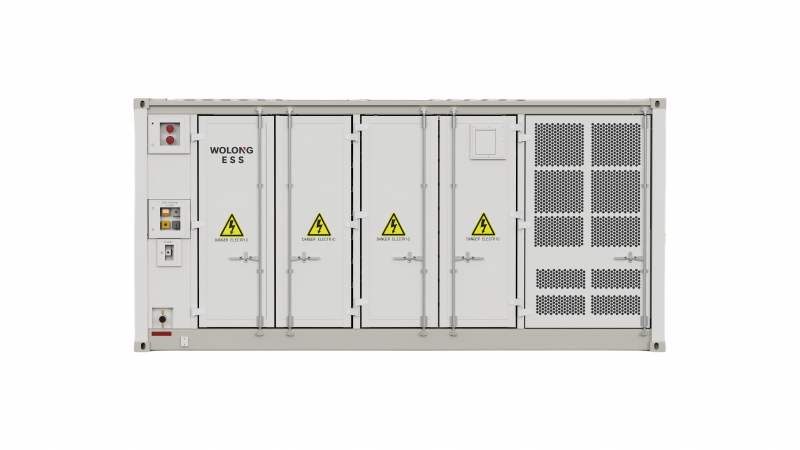
Batteries offer instantaneous response capabilities that completely transform emergency grid recovery strategies. At Wolong, we recognize that rapid power injection is vital for resuscitating dead transmission buses without hesitation. Transmission operators now look to advanced electrochemical assets instead of sluggish fossil-fuel turbines.
Engineers must maintain dedicated reserve energy buffers specifically allocated for grid failure scenarios. System controllers calibrate discharge rates to match strict voltage tolerances mandated by regional transmission organizations. Deploying utility-scale energy storage for emergency response demands meticulous engineering and precise state-of-charge management.
Why Battery Storage Is Replacing Traditional Black Start Assets
Selecting appropriate utility-scale energy storage systems requires evaluating inverter characteristics, fault current contributions, and black start protocols. Regulatory bodies mandate rigorous testing to verify that lithium-ion assets can independently energize massive regional substations. Procurement teams must scrutinize round-trip efficiency, thermal stability, and overload capacities before signing vendor contracts.
The Grid Restoration Challenge and Black Start Mechanics
Complete blackouts paralyze regional economies and demand immediate, highly coordinated corrective actions from system operators. Restoring a dead network involves gradually energizing transmission lines while managing massive reactive power surges. Batteries excel here because they inject precise voltage waveforms without relying on external grid references.
Grid-forming inverters play a central role by establishing an autonomous voltage and frequency standard from zero. Wolong supplies advanced inverter hardware capable of creating stable microgrids from scratch during severe contingencies. These sophisticated electronics control active and reactive power dynamically during initial transformer energization phases.
Managing transient stability requires continuous monitoring of circuit breakers, busbars, and substation loads. Field technicians coordinate closely with automated software to prevent secondary tripping events during the initial energization wave. Rigorous simulation models help operators predict voltage behaviors across complex, multi-tiered transmission topologies.
Inverter Control Technologies for Autonomous Energization
Conventional grid-following inverters cannot operate without an existing AC voltage signal from the main grid. Grid-forming technology overcomes this limitation by acting as an independent voltage source capable of sustaining local loads. Such capability enables utility-scale energy storage assets to form the backbone of a newly recovering network.
Handling massive inrush currents during transformer magnetization requires sophisticated overload management software. Engineers program battery management systems to tolerate brief, high-amperage spikes without triggering protective shutdowns. Precise current limitation prevents equipment damage while successfully energizing high-voltage step-up transformers across industrial corridors.
Synchronization requires absolute precision before connecting newly energized sub-networks back to adjacent regional grids. Automated controllers monitor phase angles, frequency deviations, and voltage magnitudes continuously during the alignment process. Seamless phase-matching prevents destructive electrical transients during the final reconnection sequence.
Harmonic distortion mitigation remains a critical engineering priority when operating inverter systems in islanded mode. Advanced filter designs suppress unwanted frequency components to protect sensitive downstream industrial equipment from premature failure. Clean power delivery ensures safe restoration for hospitals, data centers, and manufacturing plants.
Operational Protocols During System Restoration
Emergency dispatch centers must follow strict hierarchical sequences to prevent secondary cascading failures during recovery operations. Operators first energize critical auxiliary loads at local power plants before bringing larger transmission corridors online. Careful load step increments ensure that battery output matches real-time network absorption capacity.
Modern utility-scale energy storage systems integrate real-time telemetry that tracks available energy down to individual cell racks. Operators use this granular visibility to allocate power efficiently among competing regional demands during crises. Monitoring state-of-charge reserves prevents premature asset depletion before thermal generators restart.
Communication links between battery management hubs and transmission dispatchers must remain operational during total outages. Redundant satellite and fiber-optic communication channels ensure uninterrupted command visibility for control room operators. Secure data streams allow engineering teams to modulate power output dynamically as local grid demands fluctuate.
Environmental safety protocols dictate strict containment and ventilation measures during high-power emergency discharge cycles. Facility managers inspect thermal management loops regularly to guarantee optimal operating temperatures under extreme stress. Comprehensive safety checks protect personnel and hardware throughout high-stakes restoration events.
Strategic Value for Transmission System Operators
Integrating battery-based restoration assets slashes total system recovery time from hours down to mere minutes. Faster restoration directly minimizes economic losses and safeguards critical societal infrastructure during unexpected calamities. Transmission owners increasingly monetize this emergency capability through specialized ancillary service markets and capacity contracts.
Systems built by Wolong ensure strict compliance with international grid codes and emergency performance mandates. Reliability standards established by regulatory agencies require verifiable black start readiness from all major market participants. Robust hardware design guarantees dependable operation even after prolonged idle storage periods in harsh climates.
Long-Term Resilience and the Energy Transition
Advanced utility-scale energy storage transforms passive grid assets into active, highly resilient emergency response tools. Proper deployment empowers operators to conquer unexpected blackouts with unprecedented speed and operational confidence. Strategic investments in fast-acting electrochemical systems secure long-term grid stability against emerging threats.
Robust utility-scale energy storage systems ultimately anchor the modern energy transition and safeguard societal continuity. Future electrical infrastructure depends on versatile technology capable of handling deep decarbonization alongside emergency contingencies. Investing in flexible electrochemical assets secures long-term network stability against severe weather events and cyber disruptions.