


Drafting an ambiguous request for proposal invites inconsistent vendor bids and costly engineering mismatches later in the development cycle. Industrial procurement teams often struggle to define precise performance boundaries before releasing tenders to the open market.
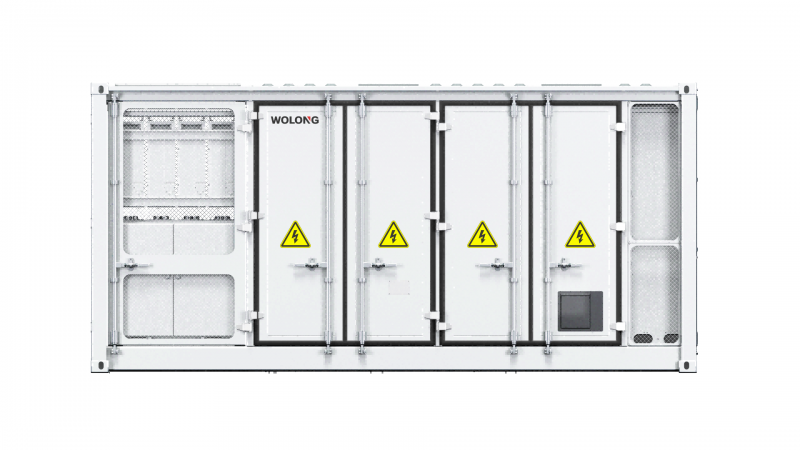
Clear technical specifications eliminate guesswork and protect project budgets from unexpected mid-stream design revisions. Establishing a standardized checklist ensures every bidder quotes transparent, apples-to-apples performance metrics.
When preparing tender documentation, engineering leads need immediate access to expert guidance and custom scoping tools. By visiting our online support portal at our contact page, project developers can connect directly with our application engineers at Wolong to streamline technical scoping. Comprehensive preparation sets the rock-solid foundation required for a seamless procurement journey from day one onward.
Defining the Core System Specifications and Scope
Tenders must clearly define nominal energy capacities, continuous discharge rates, and expected duty cycles over the multi-decade operational lifecycle. Specifying exact DC block configurations prevents bidders from cutting corners on cell quality, thermal margins, or enclosure safety standards. Procurement documents should explicitly state whether the project requires containerized layouts or indoor cabinet architectures.
Established battery energy storage system manufacturers recommend detailing auxiliary power consumption, system round-trip efficiency floors, and degradation allowances upfront. Vague capacity requirements inevitably lead to under-designed systems that fail to meet multi-year operational targets or revenue projections. Precise boundary conditions empower vendors to offer tailored hardware solutions matching exact site profiles.
Project stakeholders must also establish clear guidelines regarding auxiliary loads, HVAC power draws, and parasitic energy losses during idle states. Accounting for these operational variables prevents unpleasant surprises when calculating net deliverable energy at the point of common coupling. Clear scoping eliminates friction during technical evaluations and aligns expectations across all project stakeholders.
Thermal and Safety Compliance Frameworks
Safety documentation requirements must occupy a central position within any rigorous industrial tender package certified by any reputable energy storage battery manufacturer. Bidders need to provide certified fire suppression schematics, off-gas mitigation test data, and detailed structural load calculations. Compliance with stringent local codes, such as NFPA standards, remains mandatory for all commercial installations.
Thermal management specifications should detail liquid cooling loop redundancies, operating temperature thresholds, and emergency venting protocols. Evaluating these critical parameters safeguards your facility against catastrophic thermal runaway events during heavy cycling regimes and extreme weather. Rigorous safety filters weed out unqualified suppliers early in the evaluation process.
Facility operators must verify that selected containment units feature multi-layer defoaming, explosion-venting panels, and continuous gas monitoring sensors. Incorporating multi-tiered safety layers minimizes risk profiles for institutional investors and local permitting authorities alike. Comprehensive safety validation protects personnel, hardware, and neighboring infrastructure against unexpected operational failures.
Service Level Agreements and Operational Guarantees
Leading battery energy storage system manufacturers must outline clear component replacement timelines, warranty exclusions, and firmware update protocols. Operational continuity depends heavily on enforceable service level agreements and guaranteed response windows for critical hardware failures. Long-term performance warranties should specify minimum capacity retention curves year by year without hidden clauses.
Procurement teams must demand transparent definitions of forced outage rates and administrative penalties for missed availability targets. Establishing financial accountability encourages vendors to maintain local spare parts depots and highly responsive field engineering teams. Comprehensive service frameworks protect capital investments long after initial project commissioning concludes and commercial operations begin.
Contractual agreements must also address software licensing longevity, cybersecurity compliance updates, and remote diagnostic capabilities. Ensuring ongoing software support prevents premature obsolescence in fast-evolving digital energy management ecosystems. Vendor accountability ensures multi-decade system reliability and protects auxiliary revenue streams.
Interconnection and Electrical Protection Standards
Grid compliance metrics form the backbone of any successful utility-scale interconnection application package submitted to regional authorities. Technical bids must detail low-voltage ride-through capabilities, reactive power injection ranges, and total harmonic distortion limits. Inverters must prove absolute compatibility with regional transmission codes prior to final site delivery and grid hookup.
At Wolong, we emphasize that pre-commissioning grid simulation reports should be submitted directly with vendor tender responses. Verifying control logic compatibility prevents costly on-site synchronization failures during the final utility witness testing phase. Detailed electrical schematics ensure seamless integration with existing substation infrastructure, working alongside an experienced energy storage battery manufacturer to guarantee alignment.
Engineers should also require comprehensive short-circuit ratio analyses and harmonic impedance testing data from prospective equipment suppliers. Validating electrical interactions between power conversion systems and local transformers prevents unexpected tripping events during transient grid faults. Rigorous pre-testing secures seamless operational synchronization across complex transmission networks.
Evaluating Proposals from Qualified Vendors
Scoring incoming bids requires a balanced matrix weighing upfront capital costs against projected lifecycle operational expenditures. Selecting the lowest initial bidder often backfires when long-term maintenance and replacement costs escalate unexpectedly during commercial operation. Qualified partners provide transparent total cost of ownership models backed by verifiable field data and historical reliability records.
Choosing a certified energy storage battery manufacturer ensures your project benefits from rigorous quality assurance protocols and factory acceptance testing. Our technical experts at Wolong guide buyers through every stage of proposal evaluation and tender consolidation. Rigorous vetting secures reliable asset performance across decades of intensive commercial operation.
Comprehensive technical bid packages ultimately transform complex procurement challenges into streamlined, predictable engineering workflows. Partnering with elite battery energy storage system manufacturers guarantees that your utility-scale assets achieve maximum operational resilience. Diligent preparation today secures a sustainable, highly profitable energy future for your organization.