


The transition toward low-carbon power networks requires grid equipment capable of managing supply fluctuations from distributed solar and wind generation. As variable renewable penetration increases, power systems face frequency instability, peak congestion, and severe voltage variance across regional distribution lines.
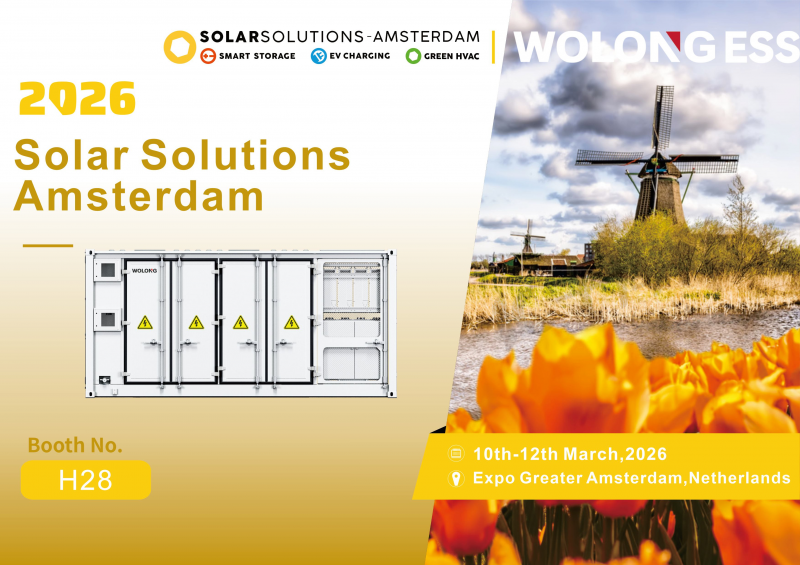
At Wolong, we develop containerized battery energy storage systems (BESS) engineered to solve these operational grid management challenges. Modern energy storage hardware serves as a flexible grid asset that provides fast-acting frequency response, voltage support, and energy time-shifting capabilities.
Deploying industrial energy storage enables system operators and commercial facility managers to smooth power output, protect downstream electrical equipment, and mitigate high demand charges. These integrated systems balance supply and demand while maintaining power quality across industrial networks.
This product spotlight examines how integrated battery architectures, liquid thermal management, and power conversion systems address current market demands. We explore key hardware design features, safety engineering, and application strategies that optimize energy asset performance.
Key Design Advantages of Today's Industrial Energy Storage
Modern utility and industrial storage systems rely on modular, containerized enclosures that combine battery racks, liquid cooling units, and power conversion equipment. Utilizing high-density lithium iron phosphate (LFP) chemistry, these enclosures offer high round-trip energy efficiency, thermal stability, and long operational cycle lives.
A core design advantage of current containerized hardware is full factory integration. Housing power conversion systems (PCS), step-up transformers, and protection switchgear within a single standardized enclosure reduces onsite engineering complexity, minimizes overall project footprints, and simplifies routine maintenance access.
Thermal management is critical for maintaining operational safety and extending equipment service life. Advanced liquid cooling loops circulate coolant directly through battery modules, maintaining uniform cell temperatures and minimizing cell-to-cell thermal variance during high-rate charging and discharging operations under harsh ambient conditions.
Integrated power step-up cabins utilize dry-type double-winding transformers designed specifically for duty-cycle profiles seen in commercial energy storage. These transformers offer low electrical losses, non-excitation voltage regulation, and robust insulation properties suitable for demanding outdoor grid operating environments.
Multi-layered safety systems are embedded directly into the structural enclosure architecture. Smart sensor arrays monitor voltage, current, temperature, and gas emissions, triggering automated fire suppression systems and isolating individual battery strings if operational anomalies are detected during continuous performance monitoring.
What Makes Integrated Renewable Energy Storage Solutions Different?
Selecting fully integrated renewable energy storage solutions resolves system matching issues often encountered when combining components from multiple equipment vendors. Coordinated engineering ensures seamless communication between the battery management system (BMS), power conversion units, and central energy management software.
At our manufacturing facilities, Wolong produces containerized energy storage platforms supported by integrated production and quality control processes. Centralized manufacturing brings cell packaging, cabinet integration, power conversion testing, and final quality control under one unified production framework.
Comprehensive factory acceptance testing ensures that every containerized system arrives on site fully pre-commissioned and ready for installation. This standardized process minimizes field wiring errors, speeds up final grid synchronization, and lowers total project installation costs for developers and engineering contractors.
Modern storage enclosures are also engineered for flexible coupling with adjacent industrial clean energy applications. High-efficiency power electronics enable battery systems to interface smoothly with AEM water electrolysis units, allowing power plant operators to direct excess clean generation toward green hydrogen production.
Advanced battery management software continuously monitors state-of-health indicators across all individual battery modules. Detailed telemetry data informs active balancing algorithms that equalize cell degradation, helping facility managers maintain predictable storage capacity over thousands of operational charge cycles.
Why Customers Choose Integrated ESS Solutions
Why do utility and commercial customers prefer integrated ESS designs? Energy managers choose integrated battery systems because they support multiple revenue streams and operational use cases. A single storage system can perform peak shaving, power factor correction, and spinning reserve support within the same operational cycle.
In utility-scale applications, containerized storage systems capture surplus mid-day solar generation and discharge power during evening peak demand periods. This dynamic balancing action transforms variable renewable generation into more predictable and dispatchable electricity resources for regional distribution networks.
Commercial and industrial customers deploy industrial energy storage to shield manufacturing facilities from high utility demand surcharges. By discharging stored energy during peak tariff hours, commercial operations lower utility expenses while ensuring reliable emergency backup power during unexpected grid outages.
Deploying renewable energy storage solutions also helps commercial facilities meet corporate sustainability goals without sacrificing power reliability. Automated power control software balances site load, solar output, and battery storage to maximize local self-consumption and reduce dependence on fossil-fuel energy.
Modular container design allows users to expand energy storage capacity incrementally as facility power demands grow over time. Additional battery cabins can be added to existing power conversion infrastructure without requiring major redesigns of primary electrical interconnects.
Field-Proven Applications and Technical Standards
Real-world deployments demonstrate the operational reliability of containerized battery storage in demanding climatic and industrial environments. High-capacity energy storage systems are actively serving utility networks, heavy manufacturing facilities, and remote power grids across diverse geographic regions.
Representative field applications include a 276-megawatt direct current storage project operating in Inner Mongolia to provide regional grid stabilization. Additionally, a 100-megawatt energy storage facility in Baotou delivers rapid response capacity to cushion industrial power networks against severe load spikes.
Compliance with international engineering standards guarantees long-term system safety and power grid compatibility. Containerized storage platforms are designed and tested according to rigorous IEC standards, validating electrical protection, enclosure structural integrity, and electromagnetic compatibility for international energy markets.
Industry collaboration accelerates the deployment of modular storage units across expanding clean energy projects. Standardized manufacturing protocols allow developers to integrate pre-tested containerized units into solar farms, wind power plants, and industrial microgrids with minimal design modification.
Advancing Modern Grid Infrastructure
The evolution of energy storage technology offers power utilities and commercial facilities practical, engineered tools for managing variable renewable generation. Integrated container designs, liquid thermal management, and smart control software provide the technical foundation for resilient power distribution.
Adopting optimized renewable energy storage solutions enables energy managers to lower operational electricity costs while supporting broader carbon reduction objectives. Standardized storage hardware bridges the gap between clean power generation and continuous grid reliability.
Partner with Wolong to implement engineered energy storage hardware designed for long-term operational performance. Contact our application engineering team today to review technical specifications and evaluate modular storage configurations for your facility.