


Interconnection queues drag on for a decade while regional transmission lines hit absolute thermal ceilings. Power generated by remote wind and solar farms routinely gets throttled because wires cannot carry extra electrons to urban load centers.
Planners face massive multi-year delays trying to permit new copper corridors through heavily populated terrain and protected ecological zones. Overcoming these chronic grid constraints requires moving beyond traditional wire upgrades to embrace active network buffering strategies.
Engineers at Wolong examine daily telemetry showing how localized congestion strands valuable clean generation assets. Physical bottlenecks force system operators to curtail zero-carbon power output during peak sunlight hours when demand is low locally.
Resolving these bottlenecks demands deploying utility-scale energy storage directly behind congested substations across the regional network. Bringing this advanced hardware online provides immediate relief without waiting for decade-long transmission line construction cycles to clear.
Copper Expansion Limits and Interconnection Backlogs
Conductor thermal limits dictate how much current flows safely before sagging or triggering emergency line shutdowns. Upgrading physical transmission paths involves arduous land acquisition, environmental reviews, and immense capital expenditure across multiple state jurisdictions.
Delaying new renewable capacity directly impacts regional decarbonization mandates and wholesale electricity pricing stability for industrial users. Network operators require non-wires alternatives that circumvent traditional permitting bottlenecks entirely.
Interconnection studies regularly stall because regional transmission organizations lack available capacity headroom on legacy buses. Developers abandon viable clean energy projects after facing prohibitive upgrade fees assigned by local transmission owning utilities.
Integrating large-scale energy storage systems into existing brownfield substations sidesteps costly line expansions completely. Capturing excess generation locally prevents costly transmission overloads before they destabilize regional grid operations and safety margins.
Transmission line congestion also creates severe financial penalties through regional price divergence during peak load events. Wholesale electricity markets penalize generation assets stranded behind congested paths without adequate export pathways to consumers.
Addressing this structural market failure requires physical buffers that store surplus energy until transmission capacity opens up. Modern grid planning must account for these spatial realities to ensure long-term system stability.
Relieving Substation Congestion Through Chemical Buffers
Batteries act as spatial buffers by absorbing surplus power when regional generation overwhelms line limits. Storing excess energy locally prevents thermal overloads while preserving valuable zero-carbon generation that would otherwise face mandatory curtailment.
Releasing that stored electricity during evening demand peaks bypasses congested transmission corridors completely. Software platforms coordinate these discharge schedules dynamically based on real-time grid telemetry and market signals.
Hardware durability remains paramount when operating units under heavy daily congestion-relief duty cycles. Wolong builds advanced electrochemical architectures designed to absorb aggressive power surges without accelerating internal component degradation.
Substation engineers rely on these robust modules to stabilize voltage drops across stressed radial circuits. Maintaining reliable power flows prevents cascading failures during high-stress operational events and unexpected grid anomalies.
Spatial constraints inside legacy substations require compact equipment footprints that fit within existing perimeter fences. Traditional expansion projects often stall because acquiring adjacent land parcels proves legally and financially impossible.
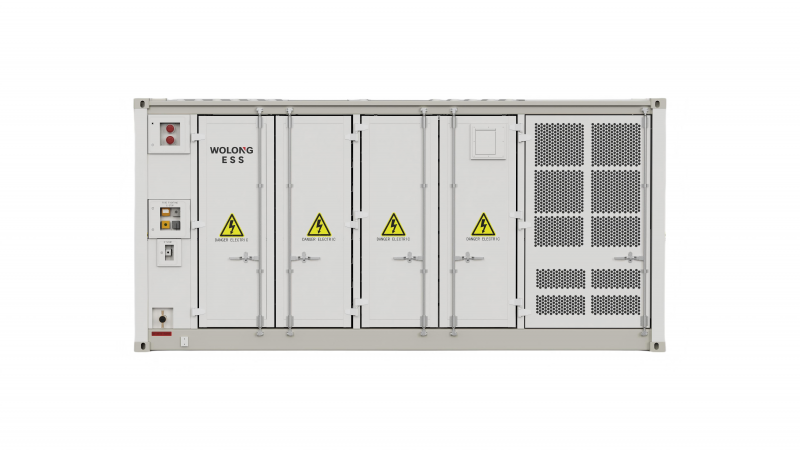
Deploying modular containerized units solves space limitations without requiring major civil engineering overhauls. Intelligent space utilization accelerates project timelines significantly across densely developed industrial regions.
Nodal Pricing Economics and Curtailment Mitigation
Nodal pricing data highlights severe economic penalties caused by localized transmission bottlenecks and ongoing congestion. Power plants located behind constrained lines receive heavily discounted rates for their generation output during surplus windows.
Deploying utility-scale energy storage right at these pricing nodes captures maximum financial value. Storing cheap midday power allows operators to sell into lucrative evening markets without paying congestion tolls.
Curtailment mitigation transforms lost revenue into steady income streams for renewable asset owners and operators. Capturing stranded electrons prevents the waste of carbon-free energy across congested regional grids nationwide.
Market participants leverage large-scale energy storage systems to hedge against volatile wholesale pricing spreads and locational marginal pricing shifts. Financial modeling proves that localized battery assets pay for themselves by avoiding forced generation cutbacks.
Redefining Transmission Planning with Modern BESS
Regulatory bodies increasingly recognize batteries as bona fide transmission assets rather than simple merchant generation units. Federal and international equivalent agencies now allow storage to defer expensive wire upgrades officially in rate cases.
Planners factor modular battery deployments into long-term transmission expansion blueprints to save ratepayers billions of dollars annually. This regulatory shift accelerates deployment velocity across bottlenecked regional grids globally.
Working closely with regional transmission planners, we at Wolong optimize asset placement across constrained corridors. By selecting optimal interconnection points, we maximize congestion relief while unlocking diverse secondary revenue streams like frequency regulation.
Precision engineering ensures seamless integration with legacy grid protection schemes and supervisory control architectures. Comprehensive system harmonization safeguards long-term capital investments across decades.
BESS as a Strategic Tool for Expanding Grid Capacity
Modern power systems demand flexible infrastructure capable of responding instantly to sudden generation shifts. Relying exclusively on legacy copper transmission leaves grids vulnerable to prolonged bottleneck delays and soaring costs.
Deploying utility-scale energy storage bridges the gap between renewable growth and physical line limits. Embracing large-scale energy storage systems secures a resilient, congestion-free energy future for global network operators.