


Engineering specifications often confuse asset owners when evaluating battery performance metrics. Rating nomenclature like 0.5P frequently appears in project datasheets without clear operational context.
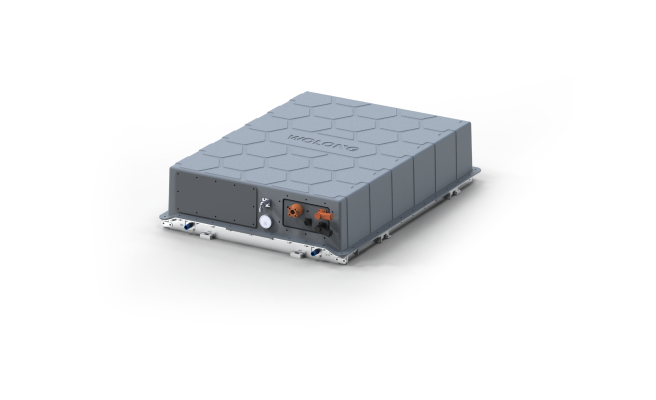
Deploying a utility-scale battery storage system requires mastering these fundamental power-to-energy ratios. Here at Wolong, we frequently help developers decode these technical specifications to optimize project economics.
Decoding the Power-to-Energy Ratio
The letter 'P' in energy storage terminology represents the power rating relative to total energy capacity. Specifically, a 0.5P rating means the system delivers continuous power output equal to half its total capacity in kilowatt-hours.
For example, a two-megawatt-hour installation rated at 0.5P provides a maximum continuous discharge power of one megawatt. This ratio defines the operational envelope of electrochemical assets across diverse grid applications.
System integrators utilize this ratio to match hardware capabilities with specific regional grid code demands. Higher power ratings demand heavier thermal management and more robust power conversion electronics.
Lower ratings optimize capital expenditure for applications requiring extended discharge windows. Engineering teams evaluate these trade-offs carefully during early project planning stages. Integrating renewable energy storage principles early prevents costly redesigns later.
Calculating Discharge Duration and Power Output
Mathematically, the 'P' rating dictates the theoretical maximum runtime of the battery under full load conditions. Dividing total energy capacity by the 0.5P power level yields a standard two-hour discharge duration.
This runtime calculation helps project developers estimate daily operational throughput and cycling limits. Accurate duration modeling within a utility-scale battery storage system framework prevents premature hardware degradation caused by improper dispatch strategies.
Operational profiles change dramatically when comparing a 0.5P asset to a high-power alternative. A slower discharge profile reduces internal cell stress and minimizes resistive thermal losses during heavy cycling.
Plant operators gain predictable performance metrics when system discharge rates align with actual load requirements. This mathematical clarity ensures optimal asset utilization over long operational lifespans.
Comparing 0.5P Versus 1P Operational Profiles
Choosing between a 0.5P configuration and a standard 1.0P setup depends entirely on the intended revenue stack. A 1.0P system discharges its entire energy capacity in one hour, making it ideal for rapid frequency regulation.
Conversely, a 0.5P configuration suits applications requiring sustained energy delivery over longer operational durations. Project developers must weigh response speed against energy volume when selecting hardware architectures.
Capital expenditure varies significantly between these two distinct power-to-energy design configurations. High-power systems require oversized inverters and intensive cooling to handle rapid electrochemical reactions safely.
Lower power ratings reduce inverter sizing expenses while maintaining high energy storage capacity. Optimizing this balance lowers upfront capital costs without sacrificing essential revenue opportunities.
Application Suitability for Energy Arbitrage
Energy arbitrage requires shifting bulk energy generation across multi-hour pricing windows to maximize financial returns. A 0.5P architecture excels in these scenarios by delivering steady power over extended operational blocks.
Markets with solar over-generation benefit immensely from multi-hour storage that absorbs surplus midday generation. Integrating advanced renewable energy storage solutions helps stabilize regional power prices during high-demand intervals.
Commercial facilities and utility operators rely on predictable multi-hour discharge profiles to smooth out intermittent generation curves. Longer discharge windows prevent premature capacity exhaustion during extended evening peak demand periods.
Strategic dispatch algorithms maximize revenue capture while maintaining safe state-of-charge margins throughout the day. Selecting the correct power rating ensures reliable performance during critical grid events.
Thermal Stress and Lifecycle Longevity
When lithium-ion electrochemical installations are placed in hostile outdoor conditions, thermal management is the determining factor in determining their long-term viability. During regular charge and discharge cycles, lower power ratings automatically result in a reduction in the amount of thermal generation that occurs internally.
The preservation of active cell chemistry and the large extension of overall working lifespans are both resulted from reduced heat stress. Over the course of decades dedicated to uninterrupted commercial service, owners of assets see fewer capacity fade difficulties.
Reliable utility-scale battery storage system designs must balance thermal dissipation with high energy density constraints. Advanced liquid cooling configurations work hand in hand with conservative power ratings to maximize component longevity.
Our engineering teams at Wolong prioritize these thermal optimizations to protect valuable capital investments. Long-term reliability transforms complex electrochemical assets into dependable revenue-generating infrastructure.
Strategic Sizing for Modern Grid Demands
Modern power networks require diverse storage durations to manage shifting generation and consumption patterns effectively. Sizing assets correctly prevents costly oversizing while ensuring compliance with stringent regional grid codes.
Industry stakeholders must analyze historical load data before finalizing equipment specifications for upcoming deployments. Proper system sizing underpins the financial viability of commercial clean energy initiatives.
Expanding modern renewable energy storage networks demands precise technical alignment between hardware capabilities and operational goals. Deploying balanced asset configurations secures long-term profitability across competitive regional power markets.
As an experienced industry provider, Wolong offers comprehensive technical guidance to help clients navigate complex sizing decisions. Careful equipment selection can play an important role in optimizing system performance, operational efficiency, and the long-term economics of energy storage projects.