


Transforming chemical energy stored in electrochemical cells into usable alternating current requires sophisticated electronic power conditioning. Without specialized conversion hardware, direct-current electricity remains locked inside local battery modules, completely unable to interface with public grids.
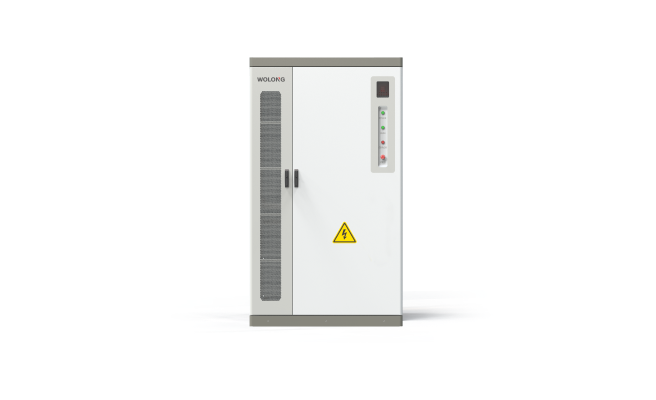
Understanding how power conversion systems bridge this electrical gap is essential for modern facility engineers. At Wolong, our technical teams design advanced conversion loops to ensure seamless energy transfer across commercial sites. Deploying robust hardware prevents costly operational bottlenecks.
Industrial facilities demand instantaneous switching between charging and discharging states to capture peak-shaving benefits effectively. Modern power conversion units orchestrate this bidirectional flow by dynamically switching internal semiconductor gates at high frequencies.
Such rapid electronic toggling transforms steady DC voltage into clean AC waveforms ready for local consumption. Proper conversion management protects downstream factory loads from sudden voltage spikes and transient electrical noise. Continuous performance monitoring guarantees optimal energy efficiency.
The Core Role of Bidirectional Energy Inversion
Converting direct current to alternating current involves pulse-width modulation techniques that chop steady voltage into precise sinusoidal pulses. During discharging cycles, the converter reconstructs smooth AC waveforms to feed industrial microgrid demands seamlessly.
When charging, the same hardware reverses its operation to rectify incoming AC grid power back into storable DC current. Deploying efficient C&I battery storage units relies heavily on this dual-direction conversion capability.
Advanced semiconductor switches, such as insulated-gate bipolar transistors, handle massive electrical loads with minimal thermal dissipation losses. Engineering teams optimize these switching frequencies to maximize conversion efficiency during partial-load operational windows.
High-efficiency inversion prevents wasted energy and keeps operating temperatures well within safe mechanical thresholds. Proper gate control minimizes harmonic interference across adjacent instrumentation circuits and digital telemetry channels.
DC Bus Integration and Voltage Regulation Dynamics
The direct-current bus serves as the vital electrical highway connecting active battery sub-racks directly to the power conversion module. Voltage fluctuations across discharging cell strings require constant regulation to prevent destabilizing downstream power electronics. A well-designed BESS battery energy storage system maintains strict DC bus voltage stability through sophisticated internal capacitor banks and active controllers.
Maintaining stable DC voltage levels prevents harmful transient feedback loops from reaching sensitive electrochemical cell layers. Engineers must configure precise voltage clamping circuits to absorb sudden regenerative braking or inductive motor loads from factory machinery. Robust DC integration safeguards hardware longevity and ensures continuous operational uptime across demanding industrial environments without unexpected interruptions.
Phase Synchronization and Grid-Forming Control
Injecting converted alternating current into an active utility network requires absolute synchronization with existing grid frequency and phase angles. Advanced digital signal processors track live grid voltage vectors continuously to match output waveforms down to the millisecond. If synchronization fails, destructive electrical short-circuits can trip protective substation breakers and halt facility operations entirely.
Modern grid-forming control algorithms allow power converters to establish an independent reference voltage during total grid outages. By visiting our C&I battery storage product portfolio page at Wolong, engineering teams can explore how our modular hardware supports islanded microgrid operations. Such autonomy proves invaluable for maintaining critical manufacturing processes during unexpected regional blackout events. Precise frequency tuning ensures absolute stability under heavy transient loads.
Managing Harmonic Distortion and Power Quality
High-frequency electronic switching inevitably generates unwanted harmonic frequencies that can distort standard sinusoidal AC power waveforms. Unmitigated harmonics cause severe overheating in upstream transformers and disrupt sensitive communication relays across local substations. Power conversion systems incorporate specialized LC filter networks to suppress high-order harmonic noise completely before export.
Maintaining strict power factor control ensures that facilities avoid costly utility penalties for reactive power consumption. Integrated controllers dynamically inject leading or lagging reactive current to maintain optimal power factor baselines automatically. Ensuring pristine power quality protects both internal industrial machinery and public distribution assets. Rigorous filtering protocols satisfy the strictest international grid code mandates effortlessly.
Thermal Management and Protective Interlocking
Continuous multi-megawatt power conversion generates significant internal thermal energy that must be dissipated rapidly through forced-air or liquid loops. Overheating semiconductor junctions leads to sudden thermal throttling or catastrophic equipment failure during peak summer operating windows.
Wolong integrates robust thermal management systems into every cabinet to maintain optimal operating temperatures. Furthermore, a modern BESS battery energy storage system requires continuous coolant flow monitoring to prevent local hotspots.
Protective hardware interlocking provides an essential final layer of safety during abnormal electrical fault conditions. High-speed mechanical contactors and electronic fuses isolate the storage array instantly if overcurrent or ground faults occur. At Wolong, our engineering standards ensure that every BESS battery energy storage system meets rigorous international safety codes. Comprehensive emergency trip testing validates hardware reliability under simulated fault conditions.
Integrating Safety Systems with Power Conversion Reliability
Industrial microgrids achieve ultimate reliability when power conversion hardware operates in absolute harmony with electrochemical assets. Implementing advanced conversion topologies ensures that C&I battery storage assets deliver maximum economic return safely and predictably.
Professional engineering oversight transforms raw electrical potential into dependable industrial power for modern corporate campuses. Long-term asset profitability depends heavily on selecting robust power conversion infrastructure from day one.