


Power grids must maintain a continuous balance between electricity generation and consumption. Even small differences between supply and demand can affect grid frequency, which directly influences power system stability. As renewable energy sources such as solar and wind become more widely connected to the grid, maintaining this balance becomes more challenging because renewable output can change quickly.
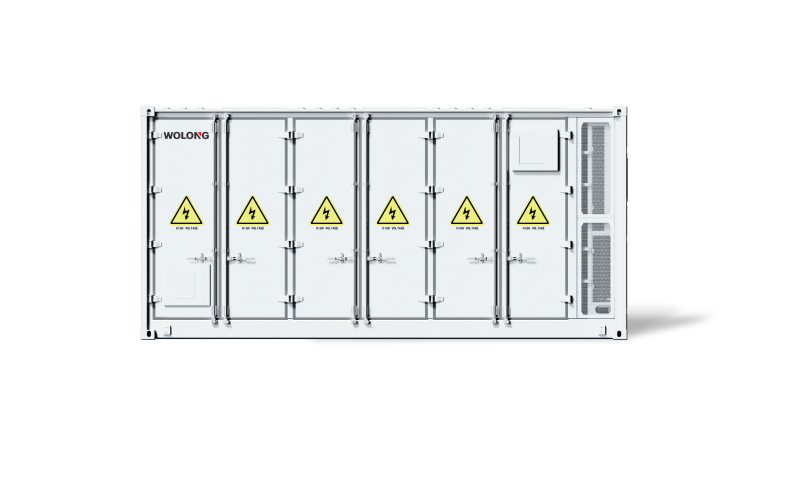
Energy storage provides a fast-response solution by absorbing or releasing electricity within a short time frame. At the generation side, storage systems can support frequency regulation by helping power plants and renewable energy projects respond more effectively to grid changes.
Why Frequency Regulation Matters for Power Generation
Grid frequency reflects the balance between electricity supply and demand. When generation is higher than consumption, frequency may rise. When demand exceeds supply, frequency may decrease.
Traditional generation assets can provide frequency regulation by adjusting their output, but these adjustments may take time and can be limited by operating conditions.
With increasing renewable energy integration, additional flexible resources are needed to maintain stable grid operation. Battery storage offers a faster way to respond to short-term frequency changes.
How Battery Storage Provides Fast Frequency Response
Battery storage systems can quickly switch between charging and discharging modes based on grid requirements. When the grid needs additional support, stored energy can be released. When excess power is available, the system can absorb electricity.
This rapid response capability makes storage suitable for frequency regulation applications where speed and accuracy are important.
Through renewable energy battery storage, renewable projects can gain additional flexibility and provide stronger support for grid stability without changing their primary power generation process.
The Role of Generation-Side Storage in Renewable Integration
Generation-side storage is installed near power generation facilities, including renewable energy projects and traditional power plants. Its purpose is to improve how electricity is managed before it reaches the wider grid.
For renewable projects, storage can help manage fluctuations caused by changing weather conditions. For conventional plants, storage can provide additional flexibility for responding to grid requirements.
By combining generation assets with storage technology, operators can improve overall system responsiveness.
Industrial Battery Storage Supports Larger Energy Applications
Large energy projects require storage systems that can operate reliably under demanding conditions. Industrial battery storage provides the capacity and performance needed for applications such as frequency regulation, renewable energy management, and grid support.
These systems are designed to handle repeated charging and discharging cycles while maintaining stable operation.
For generation-side projects, industrial-scale storage helps create a more flexible energy environment where electricity resources can respond quickly to changing grid conditions.
How We Apply ESS Technology to Generation-Side Applications
We develop ESS solutions designed for different energy scenarios, including generation-side storage, renewable integration, and grid support applications.
Our solutions focus on combining battery systems, intelligent controls, and practical engineering design to meet the operational requirements of modern power projects.
For renewable energy battery storage, effective performance depends on more than battery capacity. System integration, response capability, and application-specific design are also critical factors.
Advantages of Battery Storage for Frequency Regulation
Battery storage provides several benefits for frequency regulation compared with slower adjustment methods. Its rapid response allows energy systems to react quickly when grid conditions change.
Storage systems can also operate automatically according to control signals, reducing the need for manual adjustments.
As renewable energy continues to expand, these capabilities become increasingly important for maintaining stable and efficient power networks.
Key Considerations for Generation-Side Storage Projects
Selecting a suitable storage solution requires careful evaluation of project goals, grid requirements, and operating conditions.
Important factors include response speed, system safety, energy capacity, lifecycle performance, and compatibility with existing power infrastructure.
A properly designed storage system should not only provide immediate grid support but also maintain reliable operation over long-term service periods.
Creating More Flexible Power Generation Systems
As renewable energy becomes a larger part of the power mix, flexibility will determine how effectively generation resources can respond to grid needs. Battery storage provides an additional layer of control by allowing electricity to be adjusted quickly when frequency changes occur.
For generation-side applications, this means renewable and conventional power assets can operate with greater adaptability while supporting a more stable electricity network. We continue to explore practical ESS applications that address these changing requirements, and Wolong brings together energy storage expertise, advanced manufacturing, and global project experience to support the transition toward more flexible power systems.